Breast Imaging Exam Prep
Find out when you book
Medically reviewed by Dr. Paul Benvenuto, MD, HBSc, FRCPC
What is breast imaging?
Breast imaging can help detect breast cancer at very early stages – often two years before a lump or other symptom becomes noticeable. Anyone who has breast tissue – including gender diverse people and men – can get breast cancer.
In addition, breast imaging is a diagnostic tool used by practitioners to:
- Assess the cause of breast symptoms such as lumps, tenderness or nipple discharge
- Help identify the type, location and stage of breast cancer
- Assess the results of chemotherapy
- Evaluate the integrity of breast implants
MIC is Committed to Excellence in Breast Imaging
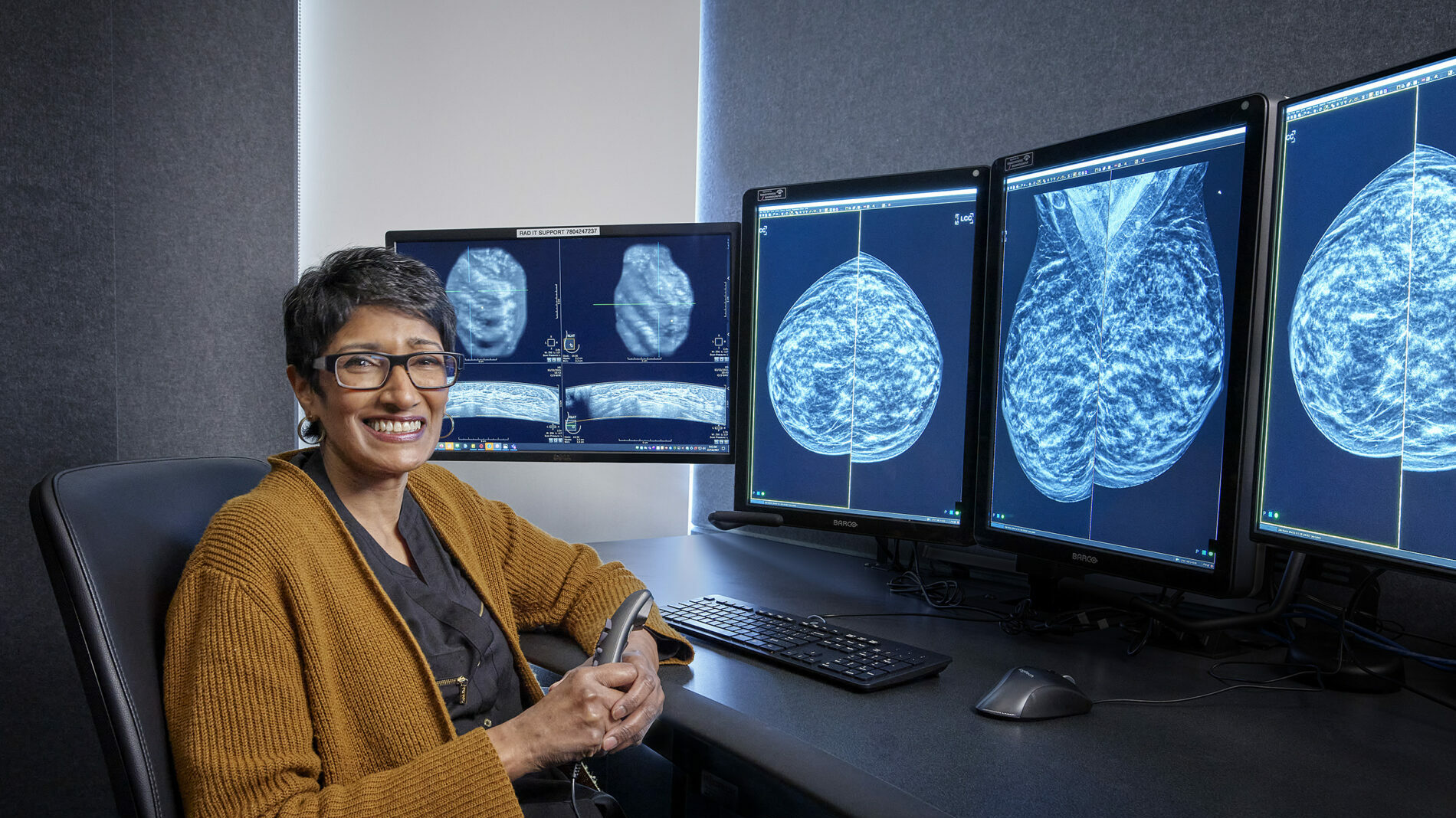
MIC’s technologists and radiologists specialize in breast imaging and offer a full range of services in our clinics:
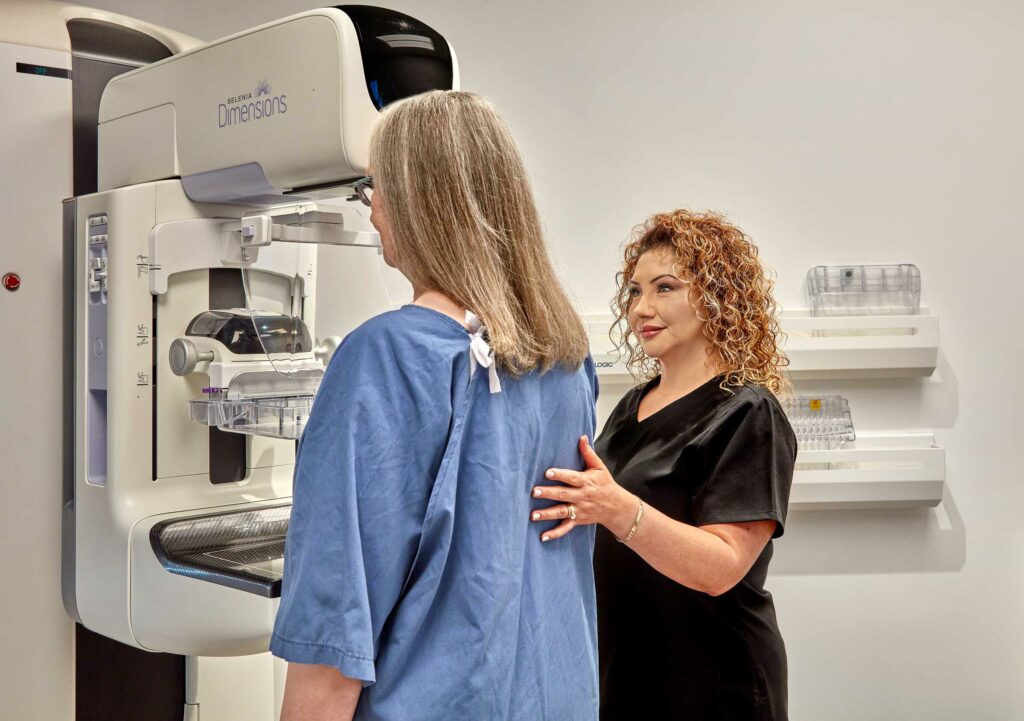
- Screening and diagnostic mammography using advanced Digital Breast Tomosynthesis (DBT)
- Breast ultrasound exams for patients with dense breast tissue using Automated Breast Ultrasound System (ABUS) or Hand Held Ultrasound (HHUS) to supplement DBT mammography.
- Diagnostic breast ultrasounds can provide additional information after a mammogram or to screen patients who are pregnant.
- Breast MRI to capture very detailed images with our 3T MRI scanner to supplement mammograms and ultrasound.
- Breast interventions such as image-guided biopsies or cyst aspiration to further explore any abnormalities found during these exams.
Mammography Self-Referral Guidelines in Alberta
The risk of developing breast cancer increases with age. Recently, the province announced changes to guidelines for breast cancer screening.
Starting April 1, 2027, you can “self-refer” for screening mammograms, beginning at age 40. This means you do not need a requisition from your healthcare practitioner, as long as you are symptom-free.
Currently, if you are between 40 and 44, you can still get your initial screening mammogram with a requisition. After your first mammogram, you no longer need a requisition for regular screening. Starting at age 45, you do not require a requisition for breast cancer screening.
Screening refers to routine exams for those without symptoms. If you have any symptoms, such as a lump, pain or nipple discharge, you will need a requisition from your healthcare practitioner. This applies to all age groups.
Learn more about self-referring for a screening mammogram and the Screening for Life Program.
Screening for the 2SLGBTQI+ Community
MIC uses biological terms to describe body parts. However, we do understand that gender diverse people may refer to their body parts using different language. Our goal is to create a safe and comfortable environment for all our patients to improve the chances of early detection and aid in the fight against breast cancer.
Should I get screened?
Any patient between 40 and 74 with breast tissue should talk to their healthcare practitioner about the potential benefits of screening, regardless of their gender identity or sexual orientation. Breast tissue refers to the tissue located on top of the chest muscles, which we evaluate during imaging. When it comes to breast screening, it’s important to consider factors such as gender-affirming hormones and top surgery.
Learn more about breast screening recommendations for the 2SLGBTQI+ Community.